How to Choose a Self-Help Retreat Safely: 12 Questions to Ask First
Most personal growth retreats are run by well-meaning people who want participants to leave better off. But the industry is mostly unregulated. Anyone can call themselves a coach, rent a beautiful house and run a "transformational" weekend. A little homework protects your money, your time and, sometimes, your emotional well-being. Use these twelve questions before you book anything, including events listed on GatherAligned. We link to each organizer's own page so you can check for yourself.
About the people
1. Who exactly is leading it, and what is their background? You should be able to find the facilitator's full name, training and experience. Search for them independently, not only on the retreat's own site. Look for teaching history, published work, professional licenses where relevant, and reviews from past participants.
2. Is the facilitator trained for the kind of work they are doing? A leadership coach running a goal-setting weekend is a reasonable fit. Someone without clinical training running intense trauma processing is not. If a program says it works with trauma, grief or deep emotional release, ask how the team is trained and what support is available if someone becomes overwhelmed.
3. What is the participant-to-staff ratio? Intense group work with forty people and one leader is a very different experience from twelve people and two leaders. Ask.
About the program
4. What will we actually do each day? A good organizer can share a sample schedule. Be cautious with vague descriptions such as "the experience will unfold as it needs to," especially for longer or more expensive programs.
5. How much is practice and how much is lecture? Skills grow through practice. A program that is mostly talks may be inspiring but leave you with little you can use.
6. Are any activities physically or emotionally intense? Long fasting, sleep deprivation, extreme breathwork, substances or confrontational group exercises carry real risks. You should know about them before you pay, and you should always be able to opt out without penalty.
7. Does the program say clearly that it is not therapy? Responsible organizers name their limits and encourage people with serious mental health conditions to talk to their clinician first. Some ask health screening questions. That is a good sign, not an inconvenience.
About money and pressure
8. What is the total cost, and what is included? Lodging, meals, materials, faculty fees, taxes and transport can change the real price a lot. Get it in writing.
9. What is the cancellation and refund policy? It should be written down before you pay. Be careful with large non-refundable deposits.
10. Will I be sold something during the retreat? Some programs exist mainly to sell the next, more expensive level. Watch for high-pressure upsells, "today only" pricing, or pitches made at the most emotional moment of the weekend. A good program lets you decide later, at home, with a clear head.
About culture and safety
11. How do they handle questions, doubt and saying no? Healthy groups welcome questions. Be wary if skepticism is framed as "resistance," if participants are discouraged from contacting family, or if there is pressure to share personal details beyond your comfort.
12. What happens if something goes wrong? Ask about emergency procedures, access to medical care (especially at remote locations), and who you can raise a concern with. If the answer is vague, treat that as information.
Signs a retreat is a good fit
- You understand what you will do, who will lead it, and what it costs.
- The organizer answers questions directly and does not rush you.
- The goals are realistic: skills, clarity and support, not guaranteed transformation.
- There is a plan for integration after you go home.
- You feel calm, not pressured, when you think about booking.
If something feels off during a retreat
You are allowed to sit out any activity. You are allowed to leave. If you feel unsafe, contact someone outside the group, and if there is immediate danger, call emergency services. Afterwards, consider sharing your experience with the venue and in honest reviews so others can make informed choices.
How GatherAligned helps
We focus on skills-based programs and link every listing to the organizer's own page with the date we last checked it. A listing here is not an endorsement, and paid featured placement never changes our safety expectations. If you spot a problem with a listing, let us know.
A note on your inner compass
Many people choose a retreat at a hard moment: after a loss, a breakup, burnout or a big transition. That is exactly when it is easiest to be swayed by a confident promise. Slow down. Talk it over with someone you trust. Bill Heinrich's Everyday Enlightenment: Trusting Your Energetic Compass is about telling fear-driven reactions apart from real inner guidance, which is a useful skill when choosing who to trust with your growth.
Good retreats will still be there next season. Take the time to choose well.
Keynote & workshop · Southern California
The Power of Energetic AlignmentHow to Shatter Burnout, Fast
Burnout Isn’t a Workload Problem. It’s an Alignment Problem.
Bill Heinrich, author of The Aligned Life Series, offers talks and workshops for Southern California teams, conferences and community groups on why people burn out even when they love their work, and how to get back into flow by realigning energy, values and boundaries.
Pre-workshop reading
 Limitless Flow
The Aligned Life Series · Book 6
 Unblocked
The Aligned Life Series · Book 4
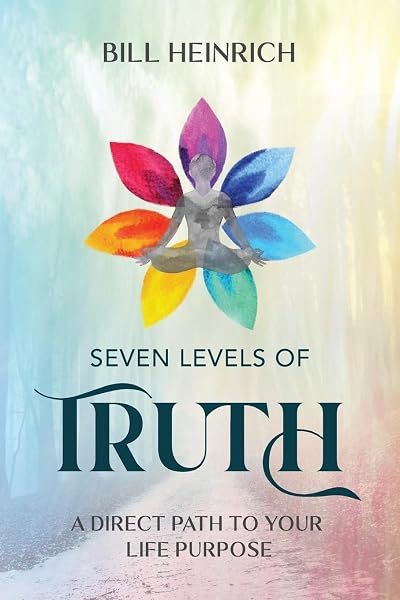 Seven Levels of Truth
By Bill Heinrich
 The Energetic Self
The Aligned Life Series · Book 2
Links go to Amazon (coming-soon Field Guides link to thealignedlifeseries.com).
Gatherings to explore
- Two Days in Ojai with Byron Katie (The Work) (Nov 6–7, 2026, Ojai, CA)
- Tiny Shifts: Breaking the Emotional Habits That Keep Us Stuck (Nov 7, 2026, Santa Monica, CA)
- Leadership Development Program (LDP) (Nov 16–20, 2026, San Diego, CA)
- Coming Home: Foundations of Mindfulness (Jan 10, 2027, Los Angeles, CA)
Keep reading
Educational content only. Not medical or mental health advice.